Thursday, March 22, 2012

What is Batik?


Using The wax to draw the pattern.
Completed the simple pattern


What is Batik?

Batiks origins can be traced back to Asia, India and Africa. Some say the word is of Malay roots and translates "to write" or "to dot".

Batik is an art medium and methodology for creating design, usually on cloth, by applying wax to portions of the material and then dyeing it, then removing the wax. This can be done to make vibrant colors and incredible designs.

Simply, batik is an amazing and ancient method of color dyeing.
Technically, batik is the process of applying dyes to porous surfaces.
Historically, batik has been around for many hundreds of years.
Esthetically, batik produces some of the most beautiful art in the world.

However, batik is not easy and involves a very labor intensive and complex process with many hours of back breaking hard work.

The first step in Batik is to design a pattern and have an idea of what you would like to create.

Wax is then placed in specific areas on the fabric using a "Canting" tool.
Wax acts like a barrier to the color dyes and allows a color to remain while the remaining non-waxed fabric absorbs the dye. Some times called “Resist Dyeing”.
Most of the time the wax is then removed by soaking the fabric in hot water. Occasionaly some wax will remain on the fabric and is easily removed in a warm wash cycle.

The batik process of dyeing and waxing repeats. The wax can be removed and re-applied several times to make beautiful and intricate designs. Repeating until all the desired colors and patterns are obtained.

The process of batik is practiced around the world. New methods and techniques are continually evolving.

In order to let our children to experience this beautiful art and culture, QQ has started the Batik class in March. The process is similar but the wax we use is not hot wax, so children can enjoy making their own pattern easily and creatively!

Thursday, October 27, 2011

How to teach children on culture Diversity?


Team work!
Children learned to decorate the Kolam.
Selecting the colour to use!
Preparing the material for Kolam making

Respect for and appreciation of racial and cultural diversity is and has always been extremely important to all of us as Malaysian. How and when to educate children on culture diversity? Cultural diversity is an important concept to grasp during childhood. Understanding that people are not all the same will enable children to embrace and value the things that make each person or group of people different. Children notice differences, and taking time to teach what is important to each culture can help foster acceptance and understanding.

Deepavali celebration is the best time to educate our children on Indian culture! By letting the children to experience themselves, they will understand better! With this objective in mind , QQ teacher has arrange a special lesson to teach children Indian culture including their food, costume, what they do during Deepavali! In order for them to experience this special day, all children and teachers were wearing Indian Costume, tried Indian food such as muruku, tosei etc. Most interesting part is decorate the kolam in front of our school!

All children have great experience and understand more about Indian culture and their Indian friend!

The Floor Decoration - Kolam

In Tamil language, the word kolam means beauty; it is a common routine with full of grace to make the home a sacred place. The female members of the house regularly draw Kolam designs in front of their homes, by using rice powder. These kolam drawings are starting with a certain number pattern of dots and curly lines going around these dots. Most of these are finished with a single line going in a stylish but zig-zag away around the entire set of dots. Everyday kolams are naturally white, an indication of purity. On exceptional or festive occasions, kolams become very rich and multicolored. The insertion of yellow (turmeric powder) in a kolam stands for prosperity.
In a Tamil home, it is believed that Kolam design bestows prosperity and success. Kolams may be connected to the earth, the stars or special festivities, but they are first and foremost a willful offering to Mother Earth. Kolam is measured as an important form of artistic manifestation of Tamil Nadu. Definitely, the kolam can be called a most important part of Tamil culture.


Wednesday, October 12, 2011

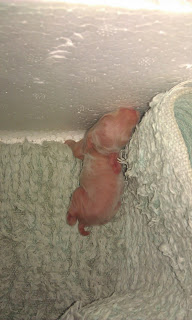
QQ has new comer "Snowy"

I am holding snowy with care!
Snowy is sleeping!
I want to touch!
Feeding time!
Taking her lunch!
so small!
finding the nipple!
This is my pet!

can i touch?
2 days old baby rabbit!
one week old sucking milk!

I can eat grass already!
I like the sun!
This is Snowy daddy!

In our kindergarten, any living things and non living things are our teaching material. As we practice holistic approach, we do not only confine our learning from the books, we also let children connect with the nature while building their character and value! How? You may ask, in QQ , we do keep pet, I have started with 2 rabbits in 2009 and later, it breed so many babies and we gave away some to QQ SP and QQ PS. The process of taking care of the rabbits from baby is so challenging and it really made our children laugh and cry! Our mummy rabbit Snow white, daughter Browny and now latest in the family snowy provide us with teaching opportunities and children with playmates. They invite social interaction and are a stimulus for learning and creativity.

What are the values we can cultivate from just having rabbit in our school?

1) Responsibility: Caring for the needs of an animal allows a child to make available something the animal cannot attain on its own. Children provide the pet with food, water, and clean housing and in the process, discover that they are needed and relied upon in a way they most likely have not experienced before. Responsibility is a natural outcome of the realization that, in this world, each person is necessary and uniquely important. Assuming responsibility, at its deepest level means children learn to be responsible for themselves, for their actions and hopefully for the global community.

3) Non-verbal communication: Brenda Bryant, a University of California-Davis Applied Behavioral Science Professor, explains that experiences with pets increase competence in children in ways that other learned tasks cannot. In addition to increased verbal skills, children naturally become more attuned to nonverbal communication as a result of interactions with their pet. This comes from their practice at “reading” their pet’s body language. But this skill is not restricted to their pet. These children also demonstrated the ability to draw the correct conclusions about emotions from human faces more accurately than those from homes without a pet.

4) Empathy: Since all animals need time to adjust to their new surroundings, we can explain the need to keep a quiet voice and to move slowly. This becomes a wonderful opportunity for us to explain about considering someone else’s feelings. By asking our children to consider how rightening this experience must be for their pet, we exemplify empathy and sensitivity. In addition, a relaxed animal is more likely to respond in a positive fashion to the child’s overtures. Robert Poresky, Associate Professor of Family Studies and Human Services at Kansas State University, found that three- and four-year olds with pets were better able to understand the feelings of other children than those without pets.

5) Patience and Tolerance: Children, who learn to care for an animal with kindness and patience, learn invaluable lessons in how to treat people as well. Pets don’t always do what a child wants. Although this creates frustration for the child, it opens an opportunity for parents to teach tolerance, respect, and patience.

6) Self-esteem: Simple caring tasks like cleaning a cage or water dish, feed the rabbit can help a child feel that they have achieved something. A job well done, especially if it is a bit of a challenge helps to build self-worth.

7) Life Cycles: Pets afford the opportunity for teacher to teach about sex, birth, grieving and death. Birth can be introduced as part of the total life cycle, the process of renewal. Witnessing animals breed, and then participating in the miraculous event of the nimal giving birth can be growing experiences for the child.


QQ Green Day

29th September is QQ Kulim Green day. This is another activity related to our GO GREEN syllabus, love the nature! As children have learned a lot on recycle, reduce and reuse, we shift to taking care of the environment this month. Children naturally are curious, and eager to learn. Doing gardening give them a lot of learning. What they learn?

Understanding Responsibility
It’s important that children are allowed to
involve in this activity and we even involved toddler who are only 2 year old. We divided the Children into groups and give them seeds to plant. We want team work and they will take responsibility to plan who put soil in the box, dig holes, place seeds, and then cover them up. They learned a lot in the process.

They also need to labelled what they have just planted so they don’t forget what’s growing and not mixed up with other group. It is their responsibilities to take care of the plant . Once their seeds start to sprout they need to weed around the plants. Then, they learned that some plants don’t belong in a garden and that it’s important to remove them so their flowers or vegetable can grow up healthy and strong. Teacher will teach them to be responsible as they need to continue to care for their plants and flowers, make sure they keep them watered every day until harvest time!

Connecting With Nature

Children will learn to connect with nature.
We can show them where food begins, explain to them that when a farmer plants a seed, it produces many of the foods they eat. Every child should know that meat is not born from a container at the grocery store or that milk doesn’t come from a bottle on the shelf.

Learning about the Circle of Life

Children will also learn that life has a cycle. They will see that from seeds come flowers and that after those flowers bloom they will turn brown, wilt and then die. It’s a lesson we all learn in time but when you teach it with beautiful flowers, the lesson doesn’t seem quite so harsh.

A lot can be learned when you put a rake or a shovel in the hands of a child.
There are so many more things that children can learn out of gardening. Like learning to protect nature, nurturing, appreciation for beauty and understanding of & respect for the circle of life. These important lessons cannot be learned by sitting in front of television or the computer.

See how they enjoyed the gardening. More photos on facebook!


I want some seeds to plant!

Teacher explanning how to plant the vegetable! See how focus children were at work!
I am digging a hole, so you put seed!
We need to put soil in the box first!
We are ready with my soil, seed and gardening tool!

Thursday, September 22, 2011

QQ Go green Creativity Contest

Concentrate and focus!
We need to build our dream house!

3rd Prize- My Dream house
2nd Prize -My Dream hous
1st prize- My dream house
Dragon Boat
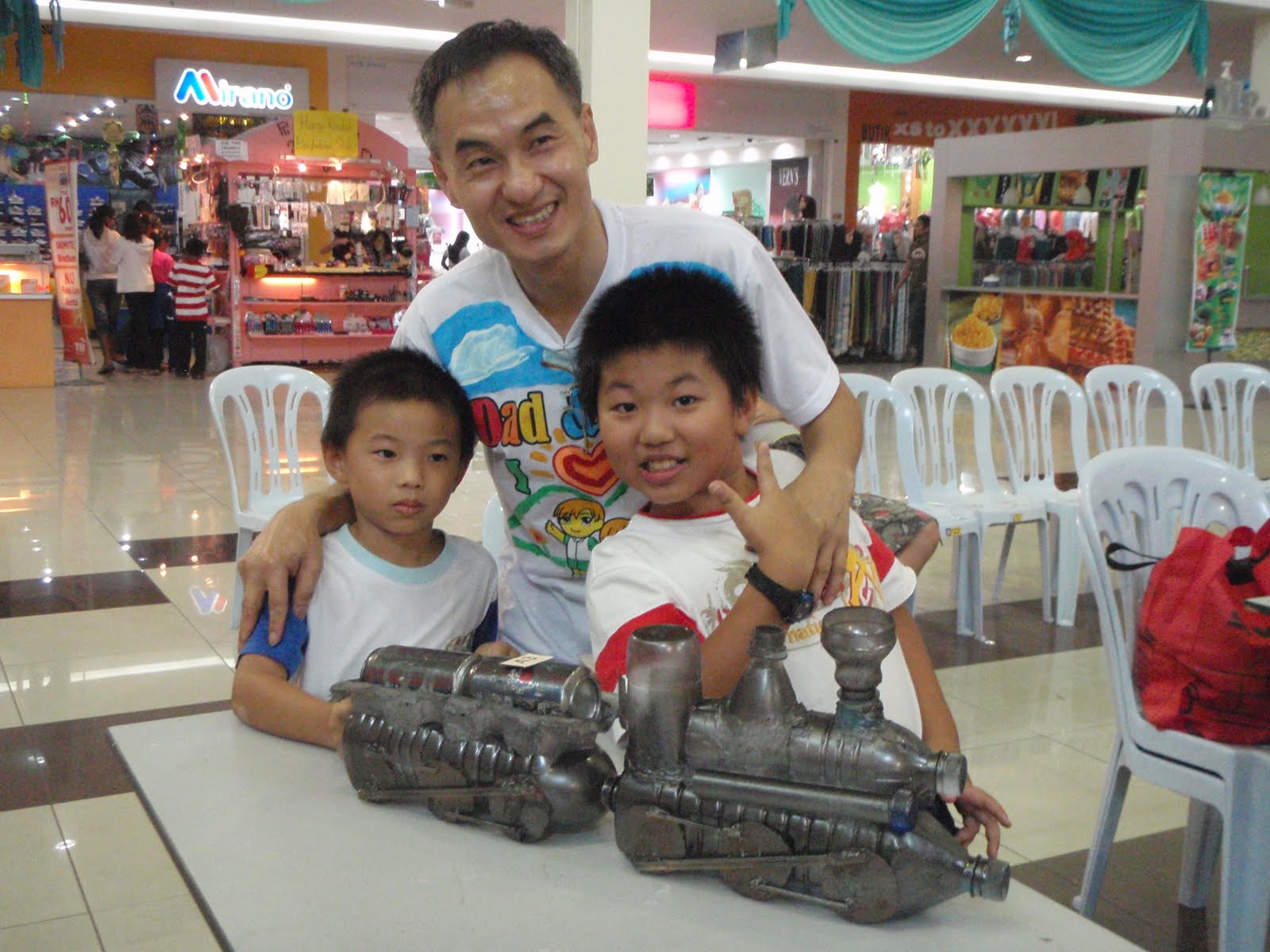
Train
Many prizes to be won!
1st prize - Train Station

We have started Go green syllabus in QQ this year, children were taught on what is recycle, how to recycle how to protect our environment, how to save water etc. In order to let parents also participate in recycle ( as every one is responsible for our earth), QQ has organised a go green creativity contest on 4th of Sept 2011 (Sunday) at Kulim Land Mark Central. The contest is opened for all 4 QQ branches- Kulim, Padang Serai, SP and Sg Ara.

The contest is divided into 2 categories, Category A is a family project and the theme was Transportation. Category B is for school project, each school has to come out with their dream home using recycle material.

The response were good as we have 7 fanilies took part in Cactegory A and surprisingly each family chose different transport.

In this contest ,I was amazed by their creativity, I also felt happy and warmth to see parents working together with their children to complete the task. Children are so focus and so proud of their finished work! I would like to thank all the parents for taking part in this activity and spending your time with your children to complete a project.

I also fascinated by teachers ideas on their dream home! go thorough more photos in our facebook. please refer to http://on.fb.me/o2NZ1a

Results :
Category A
1st Prize -RM200 + trophy - Wong Zhen Yu- Train Station (QQ Kulim)
2nd Prize - RM150+ trophy - Ng Jiey Suen -Dragon Boat (QQ SP)
3rd Prize -RM80 + Trophy - Lim Wei Khang - Train (QQ Kulim)

Category B
1st Prize - RM180 +trophy - QQ Sg Ara
2nd Prize - RM120+ Trophy-QQ Kulim
3rd Prize - RM80+Trophy -QQ Sg Petani
4th Prize - RM50+ Trophy - QQ Padang Serai